Iron Rich Plant Based Smoothie Recipe


Low iron can make a normal day feel harder than it should. Food will not replace medical care when iron levels are low, but a well-built smoothie can help you bring more plant-based iron into your routine in a way that is easy to drink, pleasant, and paired with the right absorption helpers.
This smoothie uses iron-rich vegan ingredients that actually work in a blender, including spinach, hemp seeds, pumpkin seeds, oats, cacao, tahini, and blackstrap molasses. It also includes vitamin C-rich fruit, which helps the body absorb non-haem iron, the type of iron found in plant foods.
This recipe is rich, creamy, lightly chocolatey, and bright enough to avoid tasting “green”. It makes one large smoothie or two smaller serves.
How to build a plant-based smoothie that supports iron absorption
Plant foods contain non-haem iron. This form is useful, but the body does not absorb it as easily as haem iron from animal foods. That does not mean plant-based eaters cannot meet iron needs. It means the meal needs to be built with a little more care.
The main trick is simple. Pair iron-rich plant foods with vitamin C in the same meal. Vitamin C can help convert plant iron into a form that is easier for the body to absorb.
This smoothie does that in three ways:
It includes several vegan sources of iron.
It adds vitamin C from fruit.
It avoids common iron blockers, such as tea or coffee, in the smoothie itself.
This is an informational recipe, not medical advice. If tiredness, dizziness, shortness of breath, heavy periods, pregnancy, or a diagnosed deficiency are part of the picture, speak with a qualified health professional and get blood tests if needed.
Gather the ingredients
This recipe is designed to taste good, not just look good on paper. Some iron-rich foods are excellent in savoury meals but awkward in smoothies. These ingredients blend well and balance each other.
Main recipe
Makes 1 large smoothie or 2 smaller smoothies.
Ingredient | Amount | Why it is included |
Baby spinach | 1 firmly packed cup | Adds plant-based iron and blends smoothly |
Frozen mixed berries | 1 cup | Adds vitamin C and balances the earthy greens |
Kiwi fruit or orange | 1 kiwi or 1 small orange | Boosts vitamin C for iron absorption |
Rolled oats | 2 tablespoons | Adds iron, body, and slow-release carbohydrate |
Hemp seeds | 1 tablespoon | Adds iron, protein, and healthy fats |
Pumpkin seeds | 1 tablespoon | Adds iron and a nutty flavour |
Tahini | 1 tablespoon | Adds iron, creaminess, and richness |
Cacao powder | 1 teaspoon | Adds iron and a chocolate note |
Blackstrap molasses | 1 to 2 teaspoons | Adds iron and deep sweetness |
Lemon juice | 1 to 2 teaspoons | Adds vitamin C and brightens the flavour |
Water or coconut water | ¾ to 1 cup | Helps everything blend |
Ice | Optional | Makes the smoothie colder and thicker |
If using an orange, peel it and remove any seeds. If using kiwi, peel it if preferred, though the skin is edible when washed well. Frozen berries give the best texture, but fresh berries work if you add ice.
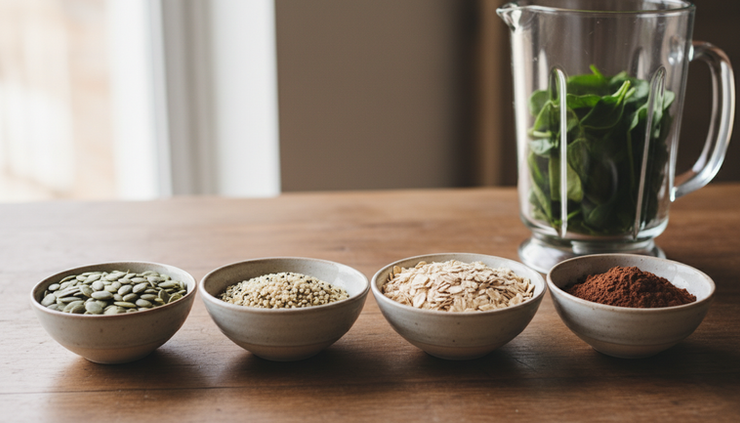
Step 1. Choose iron-rich ingredients that blend well
Start with ingredients that add iron without making the smoothie gritty or unpleasant.
The best choices here are:
Baby spinach
Baby spinach blends better than mature spinach and has a milder flavour. It also gives the smoothie a green base without needing a huge amount.
Hemp seeds
Hemp seeds are soft, creamy, and easy to blend. They add a gentle nuttiness and help make the smoothie more filling.
Pumpkin seeds
Pumpkin seeds are a useful plant-based iron source. A high-speed blender will handle them well. If your blender is less powerful, use pepita meal or soak the seeds first.
Tahini
Tahini is made from sesame seeds and gives the smoothie a creamy texture. It also helps balance the acidity from fruit.
Rolled oats
Oats add mild flavour, thickness, and extra minerals. They are a good choice when the smoothie needs to keep you full for more than an hour.
Cacao powder
Cacao has a stronger, less sweet chocolate flavour than cocoa. A small amount works well with berries and molasses.
Blackstrap molasses
Blackstrap molasses is intense, dark, and mineral-rich. Use it carefully. One teaspoon gives a gentle depth. Two teaspoons make the flavour more noticeable.
You do not need to use every iron-rich plant food in your pantry. A smoothie with too many dense seeds, powders, and greens can taste heavy. This recipe keeps the balance drinkable.
Step 2. Add vitamin C-rich fruit to help absorption
Once the iron-rich base is set, add fruit that brings vitamin C. This is the part that turns the recipe from a general green smoothie into a smarter iron-supporting drink.
Good options include:
Kiwi fruit
Orange
Strawberries
Raspberries
Blackberries
Mango
Pineapple
Lemon or lime juice
Berries are especially useful because they pair well with spinach, cacao, and molasses. Kiwi or orange adds an extra vitamin C lift and makes the smoothie taste fresher.
For the best flavour, use one full cup of berries and either one kiwi or one small orange. Add lemon juice at the end if the smoothie tastes too earthy.
Vitamin C is sensitive to heat, but this is a raw smoothie, so that is not a concern here. Blend and drink it fresh if possible.
Step 3. Keep iron blockers out of the blender
Some foods and drinks can reduce non-haem iron absorption when you have them at the same time as an iron-rich meal.
The main ones to watch are:
Tea
Coffee
Large amounts of bran
Calcium supplements
High-calcium fortified drinks, depending on the amount used
You do not need to avoid these foods forever. Timing matters. If you are making this smoothie to support iron intake, skip tea or coffee in the smoothie and have them away from the meal.
For the liquid, use water or coconut water. If you want a creamier texture, you can use a plant milk, but check the label. Many plant milks are calcium-fortified, which is helpful for calcium intake but not ideal when your goal is to maximise iron absorption in that same drink.
If you prefer plant milk, choose one that suits your overall nutrition needs. Just know that water or coconut water keeps the iron-absorption focus cleaner.
Step 4. Blend the smoothie in the right order
A better blend starts with the right order. This matters most if your blender is not very powerful.
Add the ingredients in this order:
Pour in the liquid
Start with ¾ cup water or coconut water. Add more later if needed.
Add the greens
Put the spinach in early so it has direct contact with the blades.
Add the soft fruit
Add kiwi or orange, then berries.
Add oats, seeds, tahini, cacao, and molasses
These ingredients need enough liquid to move through the blender.
Add ice if using
Ice goes on top so it does not jam the blades at the start.
Blend for 45 to 60 seconds, or until smooth. If the mixture is too thick, add another splash of water and blend again.
If using a standard blender, soak the pumpkin seeds and oats in the smoothie liquid for 10 minutes before blending. This improves texture and makes the drink smoother.

Step 5. Taste and adjust the balance
A good iron-rich plant based smoothie recipe should not taste like a chore. After blending, taste it before pouring.
Use these fixes if needed:
If the smoothie tastes | Add |
Too earthy | More lemon juice or extra berries |
Too tart | Half a banana or another teaspoon of molasses |
Too thick | A splash of water or coconut water |
Too thin | More frozen berries, ice, or 1 tablespoon oats |
Too bitter | A little banana, date, or extra orange |
Too sweet | More lemon juice or a handful of spinach |
The blackstrap molasses is the ingredient most likely to take over. If you are new to it, start with one teaspoon. You can always add more, but you cannot take it out once blended.
For a milder version, replace cacao with cinnamon. For a stronger chocolate flavour, add another teaspoon of cacao and use banana instead of orange.
Step 6. Serve it fresh with the right timing
Pour the smoothie into a glass and drink it soon after blending. Fresh is best for flavour, colour, and texture.
If you are using this smoothie to help your daily iron intake, timing can help. Have it as a breakfast, mid-morning snack, or afternoon snack away from tea and coffee. You do not need to be perfect, but a little spacing can make the meal more useful.
A simple timing guide:
Drink the smoothie with breakfast and have coffee later.
Have it mid-morning after an early coffee.
Use it as an afternoon snack before dinner.
Avoid taking calcium supplements at the same time unless advised otherwise.
If you take iron supplements, follow the instructions from your doctor, pharmacist, or dietitian. Food-based iron and supplemental iron are not the same thing, and supplement timing can matter.
Make the smoothie creamier without lowering its purpose
Creamy smoothies are easier to enjoy, especially when they contain greens and seeds. The challenge is adding creaminess without relying on high-calcium dairy-style drinks.
Try these options:
Frozen banana
Use half a banana for body and sweetness.
Avocado
Use ¼ avocado for a thick, silky texture. The flavour stays mild.
Extra tahini
Add another teaspoon, not another full tablespoon, unless you enjoy a strong sesame flavour.
Soaked oats
Soak the oats in water for 10 minutes before blending.
Frozen mango
Use ½ cup mango in place of some berries for a smoother, brighter drink.
If using avocado or banana, the smoothie may need more lemon juice to keep it fresh-tasting.
Try these variations
Once the base recipe works, change the fruit and flavour to suit the season.
Berry orange iron smoothie
Use frozen mixed berries, one small orange, spinach, cacao, hemp seeds, pumpkin seeds, tahini, oats, and molasses. This is the best version if you want a bright flavour with a gentle chocolate note.
Kiwi mango green smoothie
Use one kiwi, ½ cup frozen mango, ½ cup berries, spinach, hemp seeds, oats, tahini, lemon juice, and molasses. Skip cacao if you want a lighter tropical flavour.
Chocolate banana iron smoothie
Use ½ frozen banana, ½ cup berries, spinach, cacao, tahini, hemp seeds, pumpkin seeds, oats, molasses, and lemon juice. This version tastes more like a thick breakfast smoothie.
Citrus berry seed smoothie
Use orange, strawberries, raspberries, spinach, hemp seeds, soaked pumpkin seeds, oats, and lemon juice. Skip cacao and reduce molasses if you want a fresher taste.
Prep it ahead without losing the benefits
You can prepare smoothie packs to make mornings easier. Add the dry and frozen ingredients to a freezer-safe container, then blend with liquid and lemon juice when ready.
For one freezer pack, add:
1 cup baby spinach
1 cup frozen berries
1 tablespoon hemp seeds
1 tablespoon pumpkin seeds
2 tablespoons rolled oats
1 teaspoon cacao
When ready to blend, add:
1 kiwi or 1 small orange
1 tablespoon tahini
1 teaspoon blackstrap molasses
1 to 2 teaspoons lemon juice
¾ to 1 cup water or coconut water
Do not freeze citrus juice for too long if you want the freshest flavour. Add lemon juice just before blending.
What success looks like
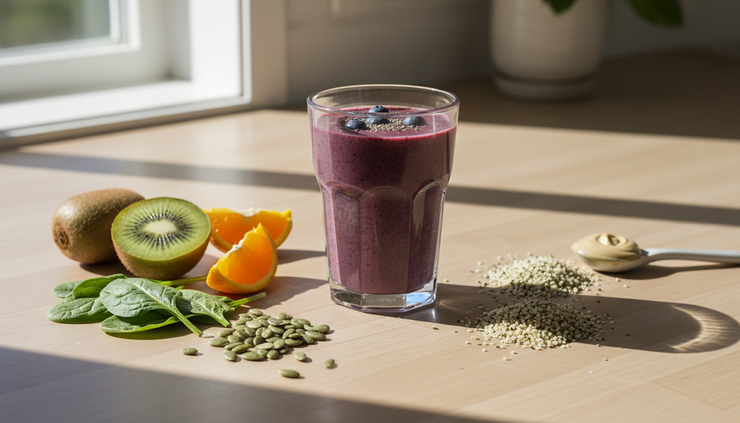
A successful iron-supporting smoothie is not just packed with ingredients. It should be balanced, drinkable, and built for absorption.
The finished smoothie should be:
Thick but pourable
Fresh from the berries, kiwi, orange, or lemon
Creamy from tahini, oats, and seeds
Lightly sweet from fruit and molasses
Free from tea, coffee, and unnecessary calcium-rich add-ins
Here is the short version. Blend spinach, berries, kiwi or orange, hemp seeds, pumpkin seeds, oats, tahini, cacao, blackstrap molasses, lemon juice, and water. Drink it fresh, and keep tea or coffee for later.
That gives you a practical plant-based smoothie with iron-rich foods and the vitamin C support that helps your body make better use of them.


Comments